
Legal Matters: December 2025
What happens when a teacher’s iPhone with nude pictures automatically syncs with their district-issued iPad? When can schools discipline students for unauthorized use of AI? Is a charter school a public school? Do parents have a legal right to opt their children out of curriculum they find objectionable?
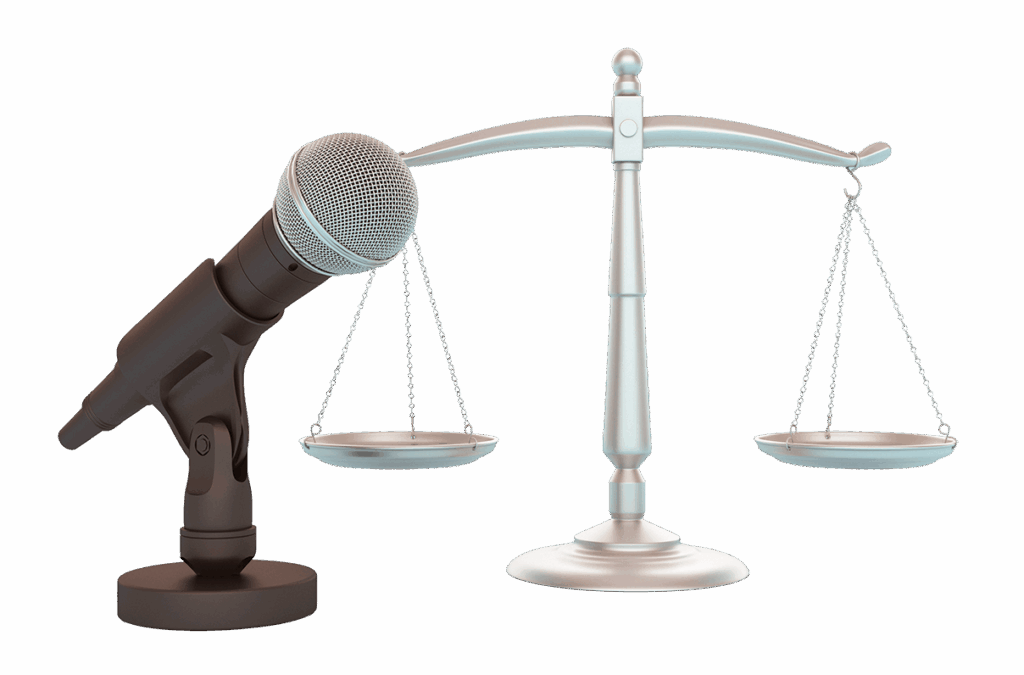
These are the type of burning questions answered on the podcast “Chalk and Gavel.” As professors of educational leadership and law who have witnessed too many avoidable legal violations, we encourage you and your staff to listen to this podcast at chalkandgavel.com. Whether you choose to listen during your commute, as you do household chores, or when you’re exercising, you can take advantage of this easy resource to increase your legal literacy.
Every other week, the hosts bring the law to life as they discuss the hottest legal developments relevant to education. Both podcasters (who are also co-authors of this article) are educational leadership professors who draw upon their previous experiences in schools. Chris Thomas is a former high school teacher and school attorney, and Jamie Kudlats is a former math teacher and middle school principal. Together, they “demystify the complex, ever-changing, and fascinating world of school law.” As they share at the beginning of every episode, the goal of their podcast is to help listeners “understand how the courtroom is connected to the classroom.”
Why This Podcast is Needed
When school employees fail to understand how the law impacts their daily lives, it can result in horrendous tragedies. Year after year, students are seriously injured or even die because school employees failed to meet their legal obligations to prevent foreseeable student injuries. School employees also unintentionally violate both students’ and co-workers’ legal rights because they are uninformed about the law. Once these errors are made, lawyers often cannot prevent the expensive, time-consuming, and emotionally draining litigation or the many other negative consequences that may result (Decker, 2025).
Unsurprisingly, these legal mistakes occur because teachers rarely receive explicit training about the law, and school leaders typically complete only one school law course as part of their licensure or graduate programs (McCarthy, 2008). As a result, educators often “view the law as a source of fear and anxiety—an invisible monster lurking in the shadows” (Schimmel & Militello, 2007,
pp. 257–58). Although school attorneys may be available for consultation, the teachers, school nurses, instructional aides, and other employees are the ones on the front lines who must make split-second decisions about legal dilemmas every day. For example, when a parent asks a teacher for details about a discipline issue, the teacher must recognize when it is legally permissible to share confidential student information.
But when employees are legally literate, they avoid making mistakes, become empowered to advocate for the changes that they want to see, and are prepared to make better decisions (Decker, 2014). To be legally literate, educators must not only know about the law, but they also need to be able to apply the law to real legal dilemmas that are occurring in schools (Decker & Brady, 2016). “Chalk and Gavel” allows listeners to increase their legal literacy because each episode is centered on a current dilemma and clarifies how the law relates.
What to Expect When Listening
Each episode follows a four-part structure. First, the “Bell-Ringer” is a short (about five-minute) segment exploring a current event or legal issue in schools. For example, the podcast has discussed pending litigation involving transgender student athletes, library book bans, as well as an executive order to close the U.S. Department of Education.
After the Bell-Ringer, the hosts take a deep dive into a significant and relevant school law court decision. In the first part of the podcast’s case study, Jamie explores the human stories behind the legal case, emphasizing the lived experiences of students, teachers, parents, community members, and school leaders. This portion is extremely helpful because it allows listeners to draw comparisons to situations that they have encountered in schools. Jamie’s breakdown of the background information is also important because the facts really do matter. To determine whether a school district is at fault, courts carefully analyze the facts of each case. For example, when deciding whether it is legal for a school to discipline a teacher for a controversial statement,
the court will analyze what was said (content), where
it was said (context), and how it was said (form)
(Decker et al., 2024).
After the facts and background have been discussed, Chris applies his experience as a school attorney and clarifies the key aspects of the court’s decision. Importantly, his straightforward explanations avoid legal jargon and are relevant to what is occurring every day in schools. He breaks down the legal journey of the case, demystifying legal decision-making and showing how courts balance competing values and interests. Whether discussing free speech, student injuries, religion in schools, special education, student discipline, or school funding, the podcast explores how courts weigh individual rights against the broader needs of the
school community.
The final portion of each episode concludes with key takeaways. These practical recommendations are vital to increasing legal literacy. They help listeners understand how the court decision discussed in the episode does—and importantly, does not—help educators make legally and ethically sound decisions.
Over the past few years, the hosts have covered many of the most impactful ‘classic’ U.S. Supreme Court cases. These are the ones that every school employee should understand. For example, there have been many references to Tinker v. Des Moines (episodes 3, 29, and 32), including an interview with Mary Beth Tinker herself (episode 50). This was the case where students wore black armbands to protest the Vietnam War. The Court decided that student expression is protected unless it 1) “materially and substantially interferes with the requirements of appropriate discipline in the operation of the school” or collides with the rights of others
(p. 505).
Another example of a significant case covered is New Jersey v. TLO (episode 15). In this landmark student search case involving cigarettes in a backpack, the Court determined that when educators have reasonable suspicion, they can search students if the search remains reasonable at its inception and throughout the scope of the search. Because school safety is at the forefront of educators’ minds, it is vital for them to know how to legally conduct student searches. This is one of many examples of how increasing educators’ legal literacy also reduces their anxiety about what they are legally permitted to do (Decker & Thomas, 2024).
In 2025, Jamie attended the Court’s oral arguments in Mahmoud v. Taylor (episode 43). “Chalk and Gavel” covered this case all the way from the trial court decision through oral arguments and the Supreme Court’s ultimate decision (episodes 12 and 48). Mahmoud will have major implications for schools given that parents successfully argued they should be able to opt-out of curriculum involving district-approved books with LGBTQ+ characters.
Unfortunately, though, Mahmoud does not provide many bright lines for when or how schools must provide parents with the opportunity to opt their children out of religiously objectionable curricular materials. But one thing is certain: “Chalk and Gavel” will continue to keep listeners informed on these complex, ever-changing, and fascinating legal developments and how they impact educators.
Your “Homework”
It wouldn’t be an educational podcast without “homework.” The hosts end each episode by sharing some with their listeners. This typically includes telling listeners that they can find “Chalk and Gavel” wherever they get their podcasts, including on Spotify and Apple Podcasts, and with video on YouTube. If educators or school leaders are interested in using the podcast to increase their legal literacy and that of their staff, there is also a Teaching Guide available on chalkandgavel.com. The guide is designed to help busy professionals identify relevant episodes by topic and understand how to incorporate each episode’s lessons into their teaching or professional development.
Ultimately, by taking steps to increase school employees’ legal literacy, we can increase educator confidence and improve our education system for all.
Janet R. Decker, JD, PhD, is an associate professor of education law at Indiana University and a co-author of Legal Rights of School Leaders, Teachers, and Students. Jamie Kudlats, PhD, is an assistant professor of educational leadership at the University of North Carolina at Charlotte and co-host of the “Chalk & Gavel” podcast. Christopher D. Thomas, JD, PhD, is an assistant professor of educational leadership and policy at the University of Florida and co-host of “Chalk & Gavel.”
References
Decker, J. R. (in press). Hidden disabilities: The urgent need to increase Section 504 legal literacy. Journal of Disability Policy Studies.
Decker, J. R. (2014). Literacy in education: An ideal time to increase research, advocacy, and action, Education Law Reporter, 304, 679–696.
Decker, J. R., & Brady, K. P. (2016). Increasing school employees’ special education legal literacy, Journal of School Public Relations, 36(3), 231–259. doi.org/10.3138/jspr.36.3.231
Mahmoud v. Taylor, 222 L. Ed. 2d 695 (U.S. 2025).
McCarthy, M. (2008). One model to infuse the law in teacher education, Action Teacher Education, 30(2), 59–70. doi.org/10.1080/01626620.2008.10463492
New Jersey v. TLO, 469 U.S. 325 (1985).
Schimmel, D., & Militello, M. (2007). Legal literacy for teachers: A neglected responsibility, Harvard Educational Review, 77(3), 257–284. doi.org/10.17763/haer.77.3.842n787555138746
Tinker v. Des Moines Indep. Cmnty. Sch. Dist., 393 U.S. 503 (1969).