
I’m a huge advocate for student voice and its impact on school culture. With National Student Leadership Week, April 20–24, fast approaching next month, I wanted to share my top three strategies for elevating student voice in school.
- Hold quarterly Student Advisory Council (SAC) meetings. These sessions are open to all students in our school. Typically, 75–100 students attend. Recently, Kayhan Kandahari, a junior approached me about creating a new platform for students to have an ongoing dialogue with me each month. He wanted to have a different opportunity than the SAC because the large size of the group doesn’t allow for every member’s opinion to be heard. I thought his suggestion was insightful.
- Create a Principal Feedback Forum. Kayhan and I collaborated and settled on several parameters to ensure we had a solid foundation for it. We limited the group to four students per grade level (freshmen through seniors), which would allow each student to have more opportunities to engage in the conversation. We also agreed that an application would have to be submitted so I could decide which students would be most likely to engage in our meeting. We also agreed that student attendance at these monthly meetings would be required to ensure that we could build trust and camaraderie among the members.
- Let students vote on topics. My favorite part of the planning emerged from an area where I hadn’t anticipated collaboration. As I explained to Kayhan members of the Forum had identified more than a dozen topics they wanted to discuss, but with only five months remaining in the school year (January–May 2026), there simply wasn’t enough time to address them all. To help us prioritize, the student said he could create a survey that his peers could complete before the first meeting. In the survey, he would build a way for us to see both the highest interest topics and the highest priorities. I was proud of how well we worked together. His knowledge of technology produced a slick, professional method for garnering student voice on topics for a committee that is all about student voice.
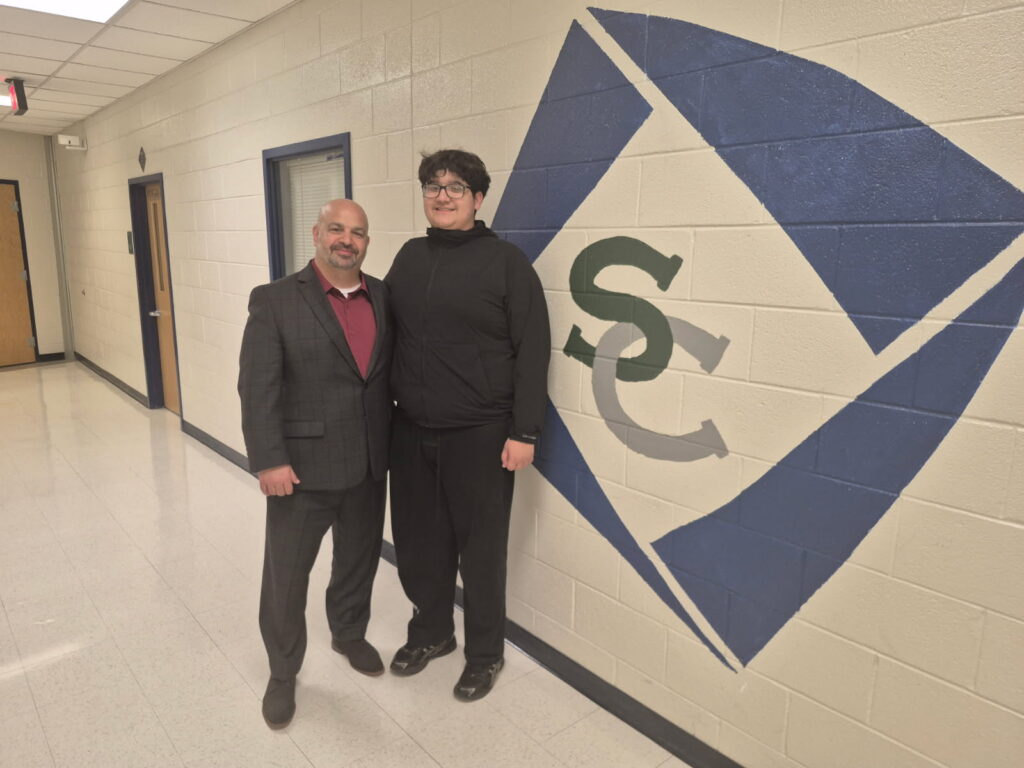
Our first meeting in January exceeded my expectations. Not only did we identify our top five priorities, but we also mapped out when each topic would be addressed based on its urgency and relevance. The students thoughtfully sequenced the discussions, ensuring that time-sensitive issues were addressed first while still preserving space for broader conversations about school culture. The priorities we agreed upon were:
- School Culture, Spirit, and Belonging (February)
- Mental Health, Stress, and Wellness (March)
- Communication and Student Voice (April)
- Activities, Clubs, and Engagement (May)
- Grading, Assessment, and Academic Policy (June)
As a bonus, the group determined that leadership roles within the forum were necessary to ensure meetings ran smoothly. Through a collaborative process, we established the following positions: president, recording secretary, corresponding secretary, media and photography coordinator, and bulletin board coordinator.
Now in my fourth year as the principal of South County High School in Lorton, VA, my 12th year as a principal overall, and my 29th year in public education, I can honestly say I have never experienced this level of collaboration or success in partnering with a student. As a proverbial “cherry on top,” Kayhan emailed me over winter break to share how much he had enjoyed working together, going so far as to refer to me as his mentor.
While educators understand that our influence on students unfolds daily, it is rare for that impact to be named so openly or discussed so comfortably. We do not enter this profession seeking affirmation, but moments like these are meaningful reminders that the work matters. When principals and students are given space to collaborate authentically, allowing creative energy to flow freely between them, the result is not only stronger relationships but a final product far greater than either could have created alone.
