After much deliberation and threats of significant funding cuts, Congress finally passed a bipartisan appropriations bill last week that will largely level-fund critical federal K–12 education programs in Fiscal Year (FY) 2026. Educators and advocates successfully pushed back attempts to cut funding, and almost every program including Title I, Title II, Title III, IDEA, CTE grants to states, Head Start, and other NASSP priorities will receive at least the same level of funding they have received for the past few years.
While these programs are still long overdue for significant increases in funding just to keep pace with the rate of inflation, in today’s current political climate, preventing any significant cuts to the programs still represents a major win for school leaders, students, and the public education system. NASSP CEO Ronn Nozoe captured this sentiment in this statement, saying:
“Congress listened. When we brought educators and students to Capitol Hill, they shared real solutions for real challenges: how to hire and keep great teachers, how to support students in mental health crises, and how to ensure every child gets what they need. We are grateful that Congress heard those voices and acted, as this funding lets school leaders focus on students instead of worrying about resources. And that’s exactly how it should be. Faithful implementation of these funding levels will be critical so school leaders can count on the resources Congress has provided.”
Securing adequate funding levels was part of NASSP’s advocacy in this legislation. Another goal was for Congress to include specific language that would prevent the Trump administration from arbitrarily refusing to distribute funding for programs even after Congress allocated it. Such language would prevent a further reduction in oversight of K–12 programs out of the U.S. Department of Education (ED) and firing more ED staff.
On this front, there was mixed success in the final bill. Congress did add additional language to attempt to prevent the administration from withholding grant funding and completely gutting the department, but the bill does not explicitly prohibit Interagency Agreements (IAAs) which the administration has been using to move programs out of the department into other agencies. The explanatory statement Congress attached to the bill includes general language clarifying their intent for which agencies should administer certain programs, but advocates had hoped for explicit language prohibiting the IAAs altogether.
The success we achieved in the funding legislation was a direct result of educators raising their voices and communicating the needs of schools and students to lawmakers. This past October, NASSP brought the National Student Council to Capitol Hill to meet with over 55 congressional offices to advocate and stress the importance of these funding programs with a legislative agenda they developed.
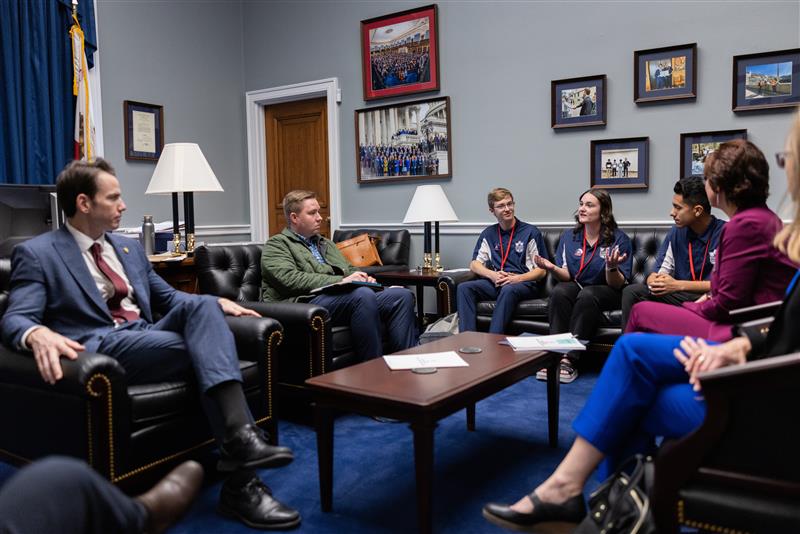
That advocacy followed the National School Leader Advocacy Conference in March where our members conducted in-person meetings with over 350 congressional offices. In addition to the in-person advocacy events on Capitol Hill, NASSP members regularly met with congressional offices in their states, conducted virtual advocacy meetings throughout the year, and sent over 12,000 email messages to Congress via NASSP campaigns about the proposed FY2026 funding legislation.
NASSP will continue to monitor how the Trump administration distributes the allocated funding from Congress and administers these critical programs in the coming year, and we will continue advocate in the best interests of all school leaders and students. We urge all our members to join us in this advocacy and tell elected officials why federal funding is a critical lifeline for schools, especially those in high-poverty and rural areas.
You can start by joining us for our next Federal Education Policy Update Webinar on Thursday, February 19, at 2:00 p.m. ET. Register here to attend and encourage other NASSP members in your state to do the same. You can also access the new NASSP Advocacy Toolkit for tips on scheduling meetings with lawmakers and other actions you can take to raise your powerful voice as a school leader. Together, we can continue to protect the federal resources that schools rely upon.