
Of the 297 schools that the U.S. Department of Education named National Blue Ribbon Schools for 2022, 9 are led by school leaders who are NASSP members. The recognition, announced last month, is given to schools in honor of their overall academic performance or for their progress in closing achievement gaps.
(more…)School of Thought Blog
Five Ways to Make the Most of Your NHS and NJHS Chapter’s Food Drive
The issue of food insecurity facing our nation is more pressing than ever. According to Feeding America, unemployment and food insecurity have soared in the wake of the pandemic. In 2021, 53 million people turned to food banks and community programs for help putting food on the table. Given this challenge, your chapter may want to host a food drive. Here are five ways to make the most of the experience:
(more…)
A Principal Who Brings Joy to the Job
For National Principals Month, we are highlighting school leaders who have made valuable contributions to their schools and communities. A few of the people they’ve impacted the most tell their inspiring stories. This week, instructional coach Magdalena Mata shares about her principal, Dr. Beto Hinojosa.
(more…)NASSP Panel Focuses on Tackling the Educator Shortage
In honor of National Principals Month, NASSP teamed up with the National Association of Elementary School Principals and the American Federation of School Administrators to host a panel discussion on the nation’s educator shortage. Held in October at the AFL-CIO headquarters in Washington, DC, and streamed online, speakers included four current school leaders: Sue Danielson of Rosa Parks Elementary School in Woodbridge, VA; Robert Motley of Atholton High School in Columbia, MD; Edward Cosentino of Clemens Crossing Elementary School in Columbia, MD; and Samuel Buckley, assistant principal of Pikesville High School in Baltimore, MD, and NASSP Pipeline Ambassador.
(more…)
Promoting Kindness and Preventing Bullying in Middle School
October is National Bullying Prevention Month, and I want to share how I have worked hard over the years to promote kindness in school. It started about 15 years ago, when I first became principal of Colony Middle School in Palmer, AK. At the time, it was pretty apparent that we needed to work on our school culture. One thing we focused on was our staff beliefs; we wanted to make sure they were aligned with how we work with students and our belief in what they were capable of achieving.
(more…)Mental healthMiddle SchoolmiddleschoolNASSP Principal of the Year Alumni NetworkSchool SafetyWellness

Why Academic Integrity Is Important to Teaching and Learning
Every decision in life has a push and pull factor; from what are we moving away and towards what are we moving. When confronted with the choice to take a shortcut solution and engage in academic misconduct, struggling students may feel they are moving towards a better course grade and away from the stress of learning. They may weigh the options of getting caught and being punished, without the awareness of long-term learning outcomes.
Research shows the need to make clear to students the policies around an institution’s commitment to academic integrity to prevent instances of plagiarism, contract cheating, collusion, and other forms of academic dishonesty.
But if academic dishonesty is purely punitive, thus making misconduct solely something to avoid, students still won’t understand why it is so important to foster original ideas, attribution, and other forms of academic integrity. Ensuring that students not only move away from academic dishonesty due to punishment but also towards academic integrity helps bolster life-long learning and upholds the academic reputation of an institution.
So, we’d like to take this moment to share why academic integrity is important to teaching and learning.
- Academic integrity supports learning opportunities. Shortcut solutions like plagiarism, contract cheating, and test banks deprive students of learning opportunities. When the work is not the student’s own, they aren’t putting their original thoughts on paper. Students then lose the opportunity to receive feedback that is accurate based on their needs and the resulting support they may need to further their learning journey.
- Accurate assessment of student learning is dependent on academic integrity. When student answers aren’t their own, it is impossible for educators to get an accurate assessment of learning and to provide feedback or make informed changes to a teaching curriculum.
- Respect for learning starts with academic integrity. Academic misconduct disrespects the academic work of others and breaks down trust. Respect is a qualitative factor that has long-term consequences in lifelong learning. For both students and researchers, proper attribution is critical.
- Academic integrity is an indicator of future workplace behavior. According to research, academic dishonesty in school leads to dishonesty in the workplace). The academic integrity journey must be firmly established to ensure a lifetime of integrity.
In their research, Guerrero-Dib, Portales, and Heredia-Escorza state, “Academic integrity is much more than avoiding dishonest practices such as copying during exams, plagiarizing or contract cheating; it implies an engagement with learning and work which is well done, complete, and focused on a good purpose— learning.” While shortcut solutions belittle education, academic integrity takes advantage of and embraces every learning opportunity.
This post originally appeared on the Turnitin Blog.
What do you do to cultivate academic integrity at your school? Comment below!
Sponsored Content Disclaimer:
Sponsored Content in Partnership With NASSP
NASSP allows select groups to share information and thought leadership with our program audiences.
A Focus on Community and Transparency
For National Principals Month, we are highlighting school leaders who have made valuable contributions to their schools and communities. A few of the people they’ve impacted the most tell their inspiring stories. This week, Sarai Kaller shares about her sons’ former principal, Teri Dudley.
(more…)Mr. Feeny from “Boy Meets World” Has a Message for Principals
Mr. George Feeny, portrayed by actor Bill Daniels, has inspired generations of young people to become educators—and principals—since “Boy Meets World” premiered in 1993.
(more…)
A Reflection on Stepping into the Light
When I accepted my Principal of the Year award at the Ohio Association of Secondary School Administrators’ (OASSA) conference earlier this month, I spoke about the importance of female representation in school leadership. I also shared how preparing my remarks for the event was incredibly challenging because of how strongly I feel about this work and my desire to honor it appropriately.
(more…)LeadershipNational Principals Monthprofessional developmentRecruitment and RetentionWomen in School Leadership Network
How Our Principal Shows He Cares
For National Principals Month, we are highlighting school leaders who have made valuable contributions to their schools and communities. A few of the people they’ve impacted the most tell their inspiring stories. This week, Alexis Morada shares about her principal, Derek Bellow.
(more…)
My Path to Winning the 2022 NHS Scholarship
“Today, we make NHS history,” said Ronn Nozoe, CEO of NASSP, “by announcing an additional four $5,000 scholarships for each of the four NHS pillars: Character, Leadership, Scholarship, and Service.”
(more…)
Together, We Are Stronger
This National Principals Month, I want to say thank you.
Thank you for your strength and stamina in these tumultuous and uncertain times. From the pandemic to politics, there’s no doubt that being a principal has become increasingly challenging these past few years.
(more…)Seven Tips for Posters That Pop!
Did you know that the average person will spend eight seconds or less looking at a poster? What’s the difference between a hallway poster that students walk by and one that grabs their attention for all of those eight seconds or longer? Here are seven tips for student leaders to keep in mind for their next posters. The tips also apply to digital posters and street-side ad signs for student events.
(more…)“I Can Promise You Right Now We Will Listen”
The stoic sheep presided above the fray in her latest regalia as down below old friends and new ones broke into intense discussions about the state of education.
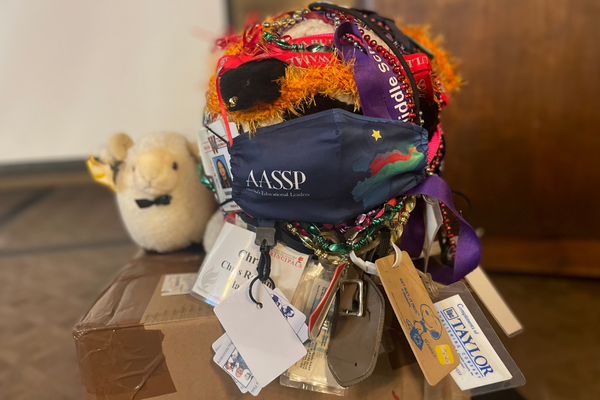
While it might be a strange sight to outsiders, the woolly mascot “Betsy the Sheep” is a familiar friend to members of Region 7, NASSP’s western affiliates. At the group’s annual meetings, Betsy is usually covered in the latest swag from Alaska, California, Hawaii, Idaho, Montana, Oregon, and Washington administrator associations. Last week was no different. School leaders from these states gathered in Juneau, AK, to make connections, improve their practice, and advocate on behalf of their students and staff. After a first-night mixer, attendees shared innovations from their states to address the top issues their schools face, including mental health challenges, student re-engagement, school leader professional development, and addressing the educator pipeline crisis.
(more…)The Twitterverse and Back to School
You know it’s September on Twitter when school leaders begin sharing the anticipation and excitement that surrounds a new academic year. We’ve collected a few of our favorite back-to-school tweets from our members and hope you enjoy a dose of new-year positivity as you peruse them. But be warned: The enthusiasm is contagious.
(more…)
Five Easy Service Project Ideas for Your NHS Chapter
As advisers it is our main job to hold our National Honor Society (NHS) chapter members to the four pillars: leadership, scholarship, character, and service. This time of year, you may be looking for easy service projects to address that last pillar. I can help! I have been an NHS adviser for over 15 years and have done several service projects that aren’t heavy lifts. Below, I’m sharing five ideas you can look into right now. But also don’t forget to check out the many service projects on the National Student Project Database that you can reach through the NHS and National Journal Honor Society (NJHS) websites.
(more…)News Accounts Tell the Stories Behind NASSP Survey Findings
In August, NASSP released results from the NASSP Survey of America’s School Leaders and High School Students. Designed by school leaders and students, this nationally representative survey explores their opinions on the challenges of leading and learning at school as well as their thoughts on mental health, school safety, and how to better meet the needs of all learners.
(more…)The Growing Need for Latino School Leaders
As our schools see increasing enrollments of Latino students, one thing many of those students aren’t seeing is school leaders who look like them.
(more…)access and inclusionBelongingLeadershipMiddle School Leaders NetworkSchool Leaders of Color NetworkWomen in School Leadership Network
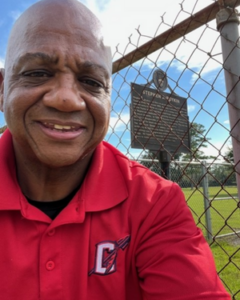
Still Learning from a Long Career in Education
After being an educator in Alabama for more than 30 years, mostly working with students of color from low-income families, I decided I wanted to share what I’ve learned over all those years with school leaders who work in similar settings. By this time next year, I should have finished my research for a doctorate in education on a subject I know well: the lived experiences of minority principals leading school transformation at high-poverty, low-performing secondary schools.
(more…)NASSP Survey of Principals and Students Reveals the Extent of Challenges Facing Schools
Last month, NASSP released results from the NASSP Survey of America’s School Leaders and High School Students. Designed by school leaders and students, this nationally representative survey explores their opinions on the challenges of leading and learning at school as well as their thoughts on mental health, school safety, and how to better meet the needs of all learners.
Here, we highlight five posts from the last year that reflect key survey findings.
(more…)